
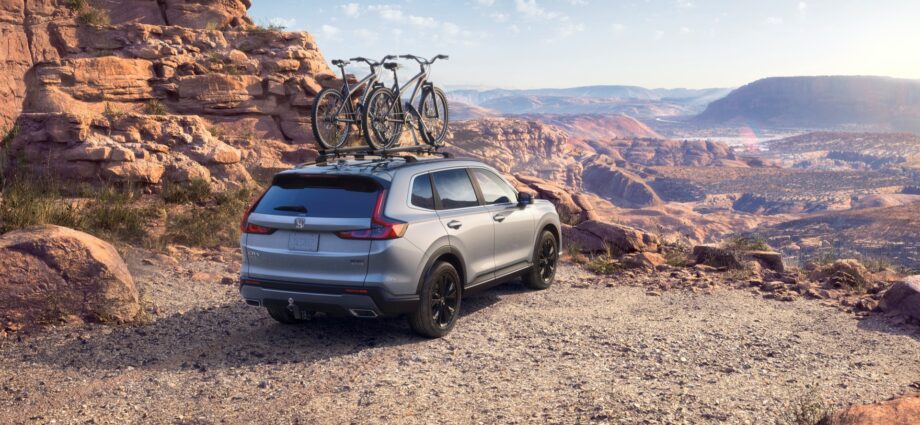
A strong-selling compact SUV rarely wins because one feature dazzles people in a showroom. The Honda CRV Hybrid keeps pulling American shoppers because it solves a plain daily problem: families want lower fuel costs, easy space, calm driving, and a brand they already trust. That sounds simple, but simple is hard in this class. Buyers in the U.S. are not shopping for science projects. They are comparing daycare runs, Costco loads, winter roads, road-trip comfort, and monthly payments in the same breath.
That is why this story matters beyond one sales headline. A trusted automotive market update can spark attention, yet the deeper reason people keep choosing the CR-V is more practical. It feels familiar without feeling stale. It gives hybrid efficiency without asking drivers to relearn how a car works. For many households, that balance beats louder styling, bigger screens, and tougher-looking badges. The quiet win is the point.
Why Honda CRV Hybrid Became the Safe Bet for American Families
The American compact SUV market has turned into a pressure test for real life. A vehicle has to fit a child seat, survive potholes, sip fuel, carry sports gear, and still feel decent after a 40-minute commute. The CR-V hybrid does not win by acting special. It wins by removing small irritations before buyers notice them.
The Practical Appeal Behind the Sales Momentum
Most shoppers do not walk into a Honda store asking for a lesson in hybrid systems. They ask what the payment looks like, how much space sits behind the second row, and whether the cabin feels comfortable enough for five years of use. That is where this model finds its lane.
A parent in suburban Ohio might test-drive a Toyota RAV4, a Hyundai Tucson, and a Nissan Rogue on the same Saturday. The final choice often comes down to less dramatic things: seat height, rear-door opening, dashboard clarity, and whether the test drive feels calm on broken pavement. The CR-V hybrid turns those small points into a steady argument.
The counterintuitive part is that excitement is not always the sale. In this class, restraint can be persuasive. A hybrid SUV that feels normal may beat one that tries harder to impress, because most buyers are already managing enough noise in life.
Why Hybrid Demand Feels Different Now
A few years ago, hybrid shopping still carried a faint “early adopter” feel for some drivers. That has faded. Gas prices move, EV charging remains uneven across many American suburbs, and buyers want lower fuel use without planning their week around a plug.
That shift helps explain why the fuel efficient SUV conversation has moved from niche to mainstream. A buyer in Phoenix, Atlanta, or Denver can see the appeal without needing a political or tech identity attached to the choice. It is a family math decision.
Honda also benefits from timing. Full EVs still face questions about charging access, winter range, and resale confidence. Hybrids sit in the middle with fewer lifestyle demands. That middle ground is not boring. It is where a huge part of the market lives.
The CR-V’s Real Advantage Is How Little It Asks From the Driver
After sales momentum gets attention, the ownership experience has to carry the weight. That is where many compact SUV rivals stumble. A model can look sharp online and still annoy people every morning with awkward controls, loud acceleration, or poor cabin storage. The CR-V hybrid wins trust by staying easy.
Comfort Matters More Than Spec Sheets Admit
Numbers help shoppers narrow the list, but they do not explain why one vehicle feels better after a long Tuesday. Seat shape, outward visibility, steering weight, and cabin noise all matter. They matter more after the new-car smell fades.
Think about a family driving from Dallas to San Antonio for a weekend tournament. The kids have backpacks, snacks, water bottles, and one blanket that somehow matters more than every other item in the car. In that setting, a flat cargo floor and a calm rear seat become more valuable than a flashy drive-mode menu.
The non-obvious insight is that comfort sells twice. It sells during the test drive, then it sells again every time the owner tells a neighbor, “I’m happy with it.” That quiet word-of-mouth has more force than a launch campaign.
Fuel Savings Work Best When They Feel Effortless
A hybrid system can look good on paper and still feel clumsy if it hunts, drones, or makes the driver aware of every transition. The CR-V hybrid’s appeal is that most owners can ignore the system and enjoy the savings. That is the mark of a mature hybrid SUV.
For official mileage checks, shoppers should compare trims through the EPA’s official fuel-economy database. Trim, drivetrain, wheel size, and driving style all affect the real result. A front-drive model in mild weather will not behave like an all-wheel-drive model in snowy Pennsylvania.
The fuel efficient SUV buyer is not always chasing the highest possible number. Many want a dependable improvement over a gas-only SUV without trade-offs that bother the family. That is the part Honda seems to understand. Savings feel better when they do not come with homework.
How the CR-V Holds Its Ground Against Tough Compact SUV Rivals
No compact SUV wins because the competition is weak. This segment is packed with serious choices. Toyota has deep loyalty with the RAV4. Hyundai and Kia bring aggressive value. Mazda aims at drivers who care about cabin feel. Subaru owns a strong weather-ready identity. The CR-V has to earn attention in a crowded room.
The Toyota RAV4 Problem Is Real
Any honest CR-V discussion has to admit the RAV4’s strength. Toyota has a massive owner base, strong resale confidence, and a hybrid reputation that took decades to build. Many American shoppers put the RAV4 on the list before they know the trims.
That pressure may help Honda. A fierce rival forces the CR-V to be cleaner in its purpose. It cannot rely on novelty. It has to feel roomy, efficient, polished, and easy to recommend. For a shopper building a shortlist, that makes the comparison useful rather than confusing.
This is where an internal guide like compact SUV buying guide can help readers compare needs instead of badges. A retired couple in Florida may value seat height and mileage. A young family in Michigan may care more about AWD confidence and rear-seat space. The better choice depends on the life around the vehicle.
Why Value Is Not Only About the Lowest Price
Some rivals may undercut the CR-V on price, add longer warranty coverage, or pack in tech features at a lower trim. That matters. Still, value is not the same as a discount.
The stronger question is what the vehicle feels like in year four. Does the interior still make sense? Are the controls easy? Does the powertrain still feel smooth? Is the brand support nearby when something needs service? Those questions push many buyers back toward Honda.
A compact SUV is often the main household vehicle, not a weekend toy. When one car handles school, work, errands, airport pickups, and weather, buyers tend to choose the option that feels least risky. The CR-V hybrid turns that lower-risk feeling into a sales advantage.
What Buyers Should Check Before Choosing One
Strong sales do not mean every trim is the right trim. That is where smart shoppers can save money and avoid regret. The CR-V hybrid may be a safe bet, but the best version depends on where you live, how you drive, and how long you plan to keep it.
Trim Choice Can Change the Whole Ownership Feel
A higher trim can feel tempting on the lot because the cabin looks richer and the feature list grows fast. Yet many families do not need the top version. The sweet spot is often the trim that gives the hybrid powertrain, the comfort features you touch daily, and enough safety tech without pushing the payment into midsize SUV territory.
A commuter in New Jersey may care about heated seats, all-wheel drive, and good phone integration. A driver in Southern California may place more weight on fuel economy and cabin cooling. A top trim is pleasant, but it is not always the smartest buy.
The non-obvious move is to test the trim you can afford, not the trim the dealer wants to show first. A loaded model can make the cheaper one feel plain. Start with the version that fits your budget, then add features only when they solve a real problem.
Ownership Costs Deserve More Attention Than Hype
Monthly payment is only one line. Insurance, fuel, tires, financing rate, registration, and maintenance all shape the cost of ownership. A fuel efficient SUV can still become expensive if the buyer stretches too far for options they barely use.
Hybrid maintenance also deserves calm thinking. Modern hybrids are not fragile mystery machines, but they are still more complex than a simple gas-only setup. Keeping tires matched, following service schedules, and choosing a dealer or mechanic familiar with the system all matter. A hybrid vehicle maintenance checklist can help owners stay ahead without overthinking it.
Used shoppers should also watch trim history and accident records. A clean, well-maintained CR-V hybrid with normal mileage can make more sense than a cheaper example with gaps in service. The best deal is not the lowest number on the windshield. It is the vehicle that stays boring after you buy it.
Conclusion
Sales headlines come and go, but some vehicles keep winning because they match the shape of ordinary American life. The CR-V hybrid does not need wild design or risky promises to stay relevant. It gives families enough space, better mileage, easy manners, and a brand story that feels familiar at the dealership and in the driveway.
That is why Honda CRV Hybrid belongs in the center of the compact SUV conversation. Its strength is not one magic feature. It is the way the pieces work together without asking the owner to compromise every week. For shoppers who want smart transportation without turning every drive into a calculation, that matters.
Before choosing, drive the direct rivals, price the trims honestly, and check official fuel-economy figures for the exact version you want. Then listen to the part of the test drive that feels quiet. That is often where the best long-term answer sits.
Frequently Asked Questions
Is the CR-V hybrid worth it for daily driving?
Yes, especially for drivers who spend time in traffic, suburbs, and mixed city routes. The hybrid setup helps reduce fuel use while keeping the driving feel familiar. It makes the most sense for buyers who plan to keep the SUV several years.
How does the CR-V compare with the Toyota RAV4?
The RAV4 has a strong reputation and broad trim range, while the CR-V often feels calmer inside and easier to live with day to day. The better choice depends on ride feel, local pricing, dealer stock, and which cabin layout fits your family.
What should I check before buying a compact hybrid SUV?
Start with fuel economy by trim, cargo room, rear-seat comfort, insurance cost, warranty terms, and local dealer support. Test-drive on roads you use often. A short loop near the dealership may not reveal road noise, seat comfort, or passing power.
Is all-wheel drive necessary on a CR-V hybrid?
It depends on your weather and roads. Snowy states, steep driveways, and rural routes can make AWD worth the added cost. In warmer areas with mostly paved roads, front-wheel drive may save money and return better mileage.
Does a hybrid SUV cost more to maintain?
Routine costs are often close to a gas model, though hybrid-specific parts can cost more if they fail outside warranty. The best protection is simple: follow the service schedule, keep tires in good shape, and use qualified technicians.
Which CR-V trim is best for most families?
The best trim is usually the one that adds comfort features you use daily without stretching the payment. Heated seats, safety tech, and phone connectivity matter more than luxury extras for many households. Test the middle trims before choosing the top model.
Is the CR-V hybrid good for road trips?
Yes, it works well for road trips because it combines strong cabin space, stable road manners, and good fuel range. Families will appreciate the cargo area and rear-seat comfort. Check tire noise and seat support during a longer test drive.
Should I buy new or used?
New makes sense if incentives, warranty coverage, and financing are strong. Used can be smarter when depreciation lowers the price without adding risk. Focus on service records, accident history, tire condition, and whether the exact trim still fits your needs.