
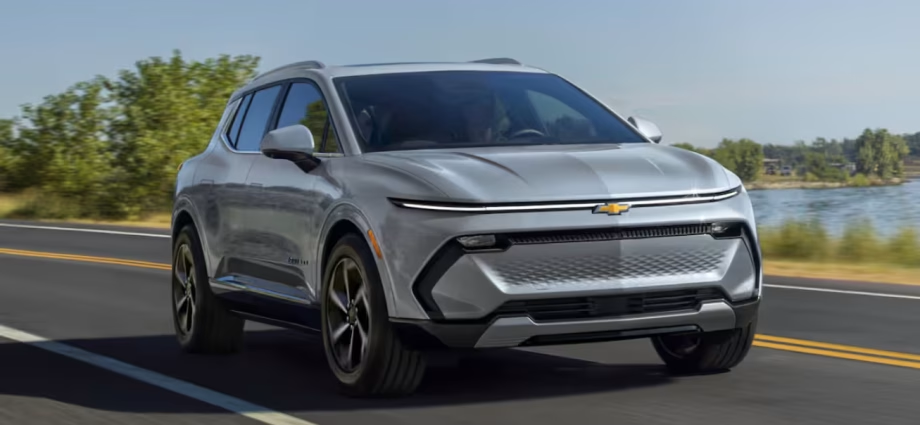
American EV shoppers have grown tired of promises made for people with six-car garages and endless patience. The Chevrolet Equinox EV is catching attention because it answers a plainer question: can a normal household buy an electric crossover without feeling punished for being practical? Starting around the mid-$30,000 range and offering up to 319 miles of EPA-estimated range on front-wheel drive models, Chevy’s electric crossover lands where many U.S. buyers live: school runs, Costco trips, bad weather, apartment parking, weekend drives, and a monthly payment that still has to make sense. That mix helps explain why shoppers, dealers, and auto watchers are treating it as more than another battery-powered launch. For readers tracking consumer product trends, this is the kind of sales story that says something larger about American buying habits. People are not rejecting EVs. They are rejecting EVs that ask too much and solve too little.
Why the Chevrolet Equinox EV Fits the Moment
The electric market in the United States has moved into a tougher phase. The early crowd already bought. The next wave is more careful, more price-aware, and less impressed by a giant screen or wild acceleration. That is where this SUV finds room. It does not ask the buyer to change their whole life overnight. It offers an affordable electric SUV with a familiar badge, useful range, and the shape Americans already trust.
Why familiar names still matter in the EV aisle
A familiar name can lower fear faster than a long spec sheet. Chevrolet has decades of driveway memory behind it, and Equinox is already a known family-SUV name. That matters when a buyer is nervous about battery life, charging, repairs, and resale value.
A driver in Ohio or Texas may not be chasing a luxury EV badge. They may want a vehicle that feels safe to explain to a spouse, a parent, or a bank loan officer. That sounds boring until you remember how cars are bought. Most people do not buy a theory. They buy confidence.
The counterintuitive part is that old-brand trust may help electric adoption more than futuristic design. A wild-looking EV gets attention. A normal-looking one gets signed paperwork. Chevy seems to understand that difference.
The affordable electric SUV buyer is not shopping like an early adopter
The early EV shopper often wanted to be first. The mainstream buyer wants to be right. That shift changes everything. Range anxiety still exists, but payment anxiety may be stronger now, especially after federal clean vehicle credit rules changed and new credits are not available for vehicles acquired after September 30, 2025.
This is why the affordable electric SUV space has become so tense. Buyers are comparing a gas crossover, a hybrid, a used Tesla, and a new EV on the same Saturday. The winner has to make sense on the lot, not in a press release.
A practical example: a suburban family that drives 38 miles per day does not need a 0-to-60 brag. It needs predictable winter range, easy child-seat access, and a dealer nearby. That is not glamorous. It sells.
Price Wins Only When the Rest of the Car Feels Normal
Price gets people to click. It does not always get them to buy. A cheap EV with poor range, odd controls, or weak dealer support can still feel risky. Chevy’s electric crossover works because the price story is tied to a normal ownership story. You get a compact SUV shape, five seats, useful cargo space, and range that covers most weeks without drama.
Why the payment matters more than the headline discount
A lower starting price means little if the trim people want costs much more. That is where buyers have to slow down. The base model gives the strongest value case, while higher trims can move the monthly payment into tougher territory.
Still, the entry point matters. Chevrolet lists the 2026 model starting at $34,995, with 319 miles of EPA-estimated range for front-wheel drive and 307 miles for all-wheel drive. For a household comparing gas, hybrid, and electric options, that range-to-price balance is the hook.
The non-obvious lesson is that affordability is not only about being the cheapest. It is about removing the feeling that the buyer is making a weird sacrifice. An electric vehicle range number above 300 miles helps. A compact SUV body helps more.
Where buyers should watch the real cost
The sticker is only one piece. Insurance, charging access, dealer fees, interest rates, and local utility plans can change the outcome. A buyer with a garage and off-peak power may see a cleaner case than someone relying on public charging near an apartment.
That does not make the car a bad fit for renters or city drivers. It means the math needs honesty. Home charging is still the quiet advantage in EV ownership. Without it, you may spend more time planning around plugs than you expected.
A smart buyer should compare the trim they would buy, not the price used in the ad. They should also check a practical home charging guide before signing. The best deal is the one that still feels good six months later.
Range and Charging Decide Whether the Excitement Lasts
Range is where EV interest turns into daily trust. A buyer can like the design, love the price, and still walk away if the charging story feels messy. This model gains ground because its range figure clears a mental line for many Americans. It starts to feel like a car, not a project.
What the 300-mile range means in real life
A 300-plus-mile estimate does not mean every driver gets that number every day. Highway speed, cold weather, tire choice, hills, and cabin heat all matter. The better way to read electric vehicle range is as a comfort buffer.
For example, a nurse commuting 52 miles round-trip in suburban Atlanta could go several workdays before needing a full recharge. A parent in Phoenix doing school pickup, groceries, and soccer practice may treat charging like plugging in a phone twice a week. That rhythm is the real selling point.
The official EPA-facing listing on FuelEconomy.gov is a useful place to verify ratings before buying. It keeps the conversation grounded, which matters in a market full of dealer claims and social media guesses.
Charging speed is useful, but charging habits matter more
Fast charging gets the headlines. Daily charging habits carry the ownership experience. Chevrolet says the vehicle can add meaningful miles on DC fast charging, but most owners will judge the car by how easy it is to wake up with enough range.
That is where many first-time EV buyers misread the problem. They imagine standing at public chargers every few days. In a good setup, that rarely happens. The charger at home does most of the work while the owner sleeps.
The counterintuitive point is that a slower home charger can feel more freeing than a faster public charger across town. You do not need theater. You need routine. For many families, that routine is what turns a test drive into a purchase.
Why Fast Sales Say More About Trust Than Hype
The strongest signal around Chevy’s electric crossover is not that shoppers suddenly became EV loyalists. It is that many of them found a battery-powered SUV they could explain in one sentence. Good range. Fair price. Known brand. Normal size. That is the whole pitch, and it may be enough.
Sales momentum is stronger when the story is simple
In July 2025, GM said it sold more than 19,000 EVs in the United States, led by more than 8,500 units of this electric Chevy SUV. GM also called that month the best U.S. sales month ever for a non-Tesla EV. That kind of milestone matters because it points to demand outside the usual Tesla-centered conversation.
The broader market is not easy, though. Cox Automotive reported that U.S. EV sales fell 27% year over year in the first quarter of 2026, even as market share steadied near 6%. That makes the model’s appeal more interesting, not less. It is gaining attention in a market where buyers are more selective.
A weak EV market can expose shallow products fast. It can also reward the models that solve ordinary problems. This appears to be one of those cases.
The trade-offs are real, and that may help credibility
No buyer should pretend this SUV is perfect. Some shoppers will miss Apple CarPlay and Android Auto. Others may want faster highway charging, a roomier rear cargo hold, or sharper driving feel. A few will compare it with used luxury EVs and wonder if the Chevy badge feels too plain.
Yet plain can be a strength. The car does not need to win every enthusiast argument. It needs to make sense for the buyer who wants to stop buying gas without turning car ownership into a hobby.
That is also why an affordable EV comparison should focus on life fit, not only specs. A better electric car for one household may be the worse one for another. The winner is the one that matches the driveway, the budget, and the week.
Conclusion
The next phase of electric adoption in America will not be won by the loudest launch or the strangest dashboard. It will be won by vehicles that feel easy to own. Chevy’s electric crossover has become a serious contender because it meets buyers at a practical point: good range, familiar shape, fair starting price, and a dealer network many shoppers already know. The Chevrolet Equinox EV also shows that the affordable electric vehicle market is not dead after tax-credit changes. It is becoming more disciplined. Buyers are asking harder questions, and that is healthy. It pushes automakers to build EVs that work outside wealthy ZIP codes and tech-heavy bubbles. For American families, commuters, and first-time EV shoppers, the lesson is simple: do not chase the flashiest model. Choose the one that makes your normal week easier.
Frequently Asked Questions
How much does Chevy’s electric crossover cost in the United States?
The 2026 model starts in the mid-$30,000 range before taxes, fees, options, and dealer pricing changes. Higher trims cost more, so buyers should compare the exact version on the lot against gas, hybrid, and used EV choices.
Is this affordable electric vehicle good for first-time EV buyers?
Yes, it fits many first-time buyers because it feels close to a normal compact SUV. The range is useful, the brand is familiar, and the cabin layout is not too strange. Home charging still makes ownership much easier.
What electric vehicle range should buyers expect day to day?
The front-wheel drive model is rated up to 319 miles, but daily results vary. Cold weather, highway driving, heavy loads, and fast acceleration can lower range. Most shoppers should treat the estimate as a planning guide, not a promise.
Is the affordable electric SUV better than a used Tesla?
It depends on what you value. A used Tesla may offer stronger charging access or quicker performance. The Chevy option may feel easier for buyers who want a new-car warranty, familiar controls, local dealer help, and a lower-risk family SUV shape.
Can renters own this electric crossover without home charging?
Yes, but it takes more planning. Renters should check nearby public chargers, workplace charging, charging prices, and local reliability before buying. Without regular charging access, even a good EV can become less convenient than expected.
Does it still qualify for the old federal EV tax credit?
The old federal clean vehicle credit is no longer available for vehicles acquired after September 30, 2025. Buyers should check current IRS rules, state rebates, utility offers, and dealer programs before assuming any incentive applies.
Why are buyers choosing this model over flashier EVs?
Many shoppers want a vehicle that solves ordinary needs without making ownership feel risky. The familiar SUV size, useful range, and Chevrolet badge can matter more than extreme speed or luxury styling for everyday American households.
What is the biggest drawback shoppers should know?
The biggest drawback depends on the buyer. Some will miss phone mirroring features, while others may want faster road-trip charging or more cargo room. A test drive and charging plan matter more than reading specs alone.